Welcome to our “Women in tech” blog series! Here, we put the spotlight on the talented women in our teams who are pushing the boundaries of technology. Throughout this series, we’ll explore their career paths, celebrate their accomplishments and discuss the skills, routines and mindsets that help them excel in the fast-paced tech world.
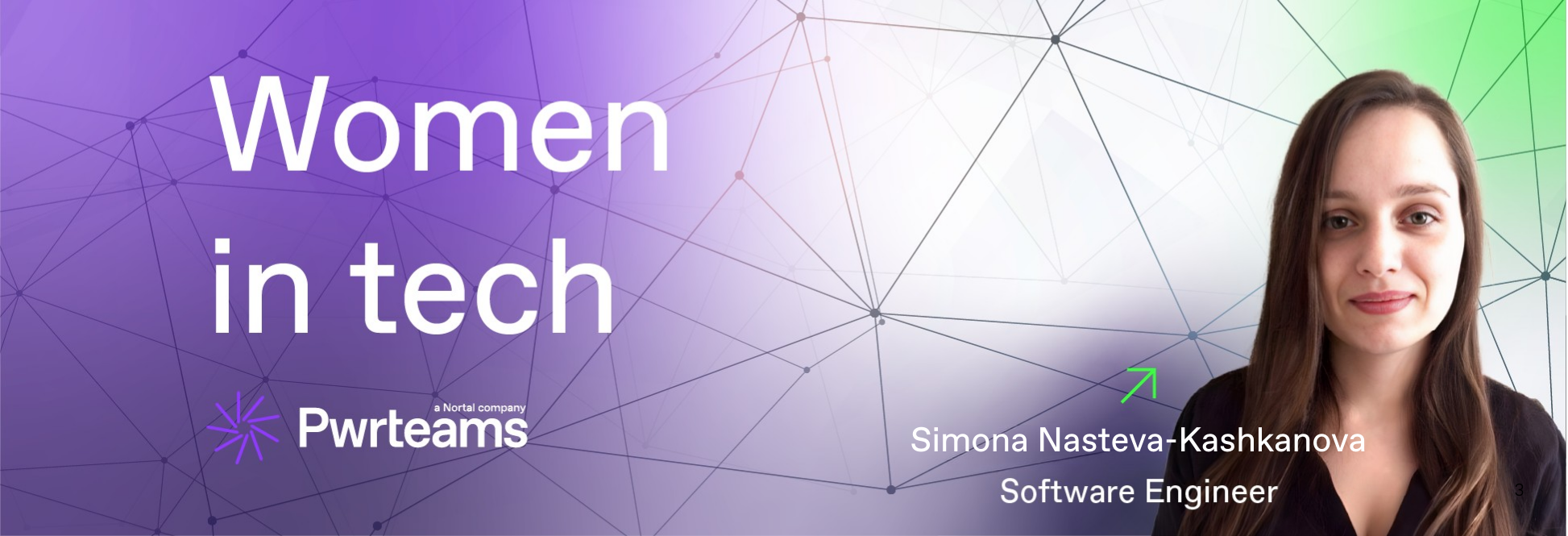
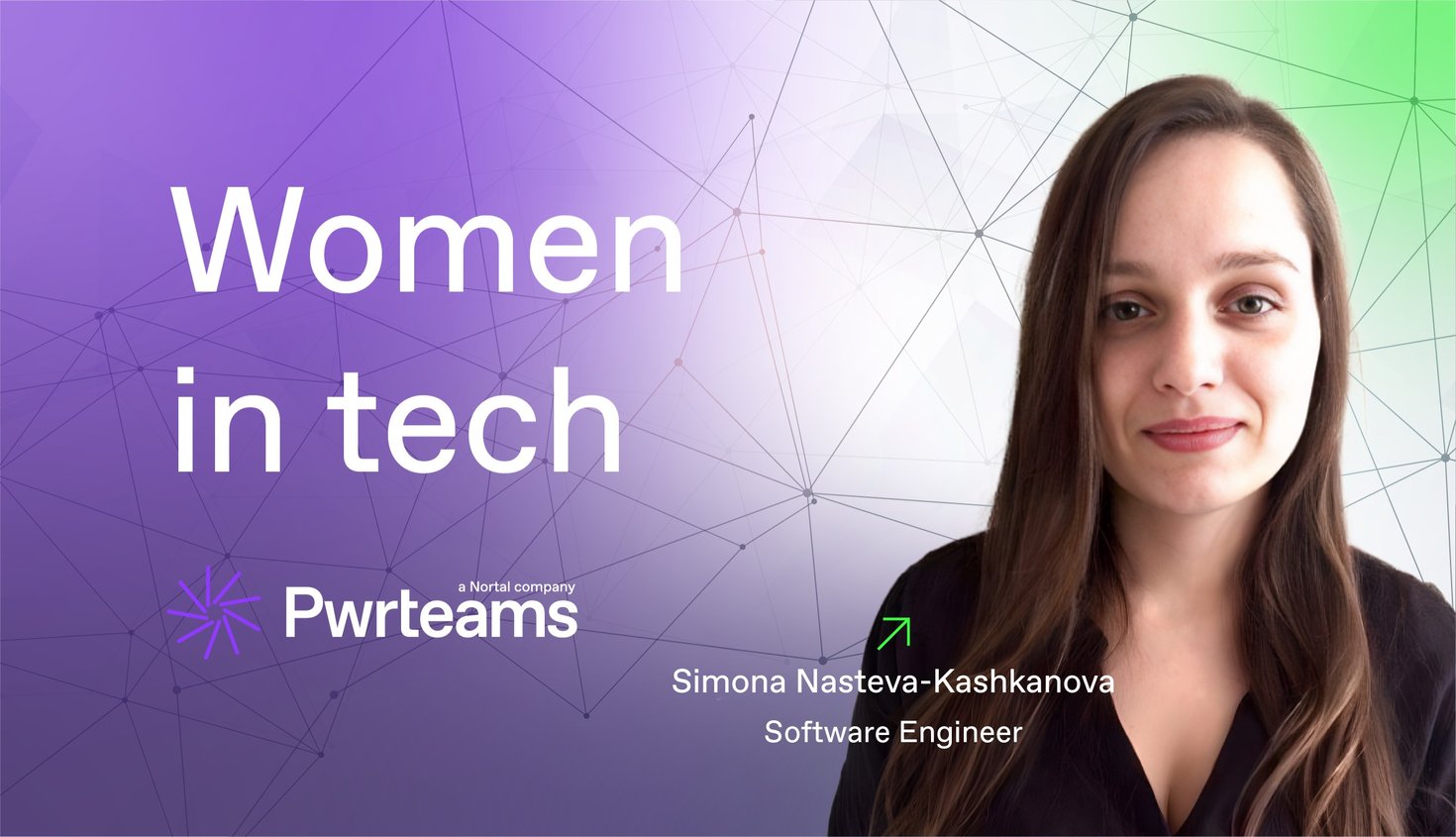
Today, we’re thrilled to feature Simona Nasteva-Kashkanova, Software Engineer at the Funding Circle dedicated team at Pwrteams Bulgaria. She talked with us about how moving from design to software engineering influenced her approach to scalable solutions, how she maintains focus in a demanding environment and what makes her team’s culture so special.
Keep reading for Simona’s thoughts on lifelong learning, why soft skills matter more than ever in engineering and her advice for women aiming to advance in software development.
Hi Simona, could you briefly introduce yourself?
Hello! I'm Simona, and I'm a software engineer at the Funding Circle team at Pwrteams. I have been with the company for almost three years, and I truly enjoy solving complex technical challenges.
Outside of work, my passion for problem-solving continues. I spend time on personal side projects, and I also enjoy the adventure of hiking, camping and off-roading with family and friends.
What was your previous educational & professional background?
My background is quite diverse, and I’ve held various positions across different companies that are related to my current role. A significant turning point in my career was when I transitioned from a designer role to a software engineering position. This move was a great decision because it quickly expanded my knowledge across the entire tech stack.
I made this deliberate choice because I was drawn to the problem-solving and creative nature of software engineering – building technical solutions from the ground up. My academic path supported this transition, as I hold a bachelor's degree in Engineering Design and a master's degree in Software Engineering. Unlike many, I found that my design foundation has greatly enhanced my ability to approach development with a focus on both technical quality and scalable solutions.
Tell us more about the Funding Circle team at Pwrteams. What is it like working there?
If I had to describe the Funding Circle team in one word, it would be “engaging”. My current team is the best I have worked with. They are supportive, fun, highly experienced professionals who uphold excellent engineering standards.
From a broader perspective, Funding Circle offers great opportunities for engineers to deepen their knowledge and use their strengths on impactful projects. It is also an inclusive place to work, where you can find inspiring people with various interests, both in and outside tech, making the environment truly collaborative.
What does your typical workday as a software engineer look like?
A standard day is a mix of activities crucial for maintaining and improving our platform. I often start with focus time, dedicating my most productive hours to coding and resolving tickets. I also spend a significant part of the day pairing with colleagues, which is essential for knowledge sharing and working through complex problems together.
Other key elements include participation in team meetings (stand-ups, planning, refinement), dedicated time for pull request reviews and constantly monitoring our systems to proactively manage performance and stability.
What are the top three skills every software engineer should master, and how have they helped you in your career?
For me, the top three skills for any software engineer are continuous learning and curiosity, discipline paired with adaptability and the ability to find joy in complex problem-solving.
Continuous learning was the driver behind my shift from design to software engineering, enabling me to constantly master new technologies. Discipline and adaptability go hand in hand – discipline maintains the standards required for excellent code quality, while adaptability is needed when requirements or technical challenges arise. Finally, finding joy in problem-solving has helped me foster a positive environment, which is essential for approaching challenging technical tasks with creative energy.
How do you manage and prioritise tasks in a high-demand work environment?
My approach is systematic, focusing first on clarity and then on collaboration. I always begin by writing down all my tasks. This act of externalising the workload instantly clears my mind and makes it far easier to assess priorities and decide what to do next. With the workload clearly captured, prioritisation is always driven by following the defined team goals and their deadlines. I use criteria like urgency, dependency and overall impact on goals to sequence my work effectively. Finally, for complex tasks, I actively seek to pair with teammates.
What do you consider your biggest achievement?
I consider my biggest professional achievement to be the successful transition I made across different technical disciplines. This includes moving from a designer to a developer role and then expanding my scope from front-end to back-end and backwards again, achieving a full-stack perspective.
This journey gave me a unique and valuable asset – the ability to approach tasks and deliverables from many different angles. My versatile engineering approach is not limited to a specific layer of the stack; it helps me successfully tackle a wide range of different tasks by focusing on architecture and efficient problem-solving.
Have you faced any gender-related biases or challenges? And if yes, how did you overcome them, and what helped you stay resilient?
While I have not experienced any gender-related bias in my current role, I have certainly observed it earlier in my career at previous companies.
My strategy for navigating these situations, and the source of my resilience, is to consistently focus on performance and results. I think the most effective thing you can do is keep growing and investing in yourself professionally, while consciously not paying attention to negativity or distracting dynamics.
How do you see the role of a software engineer in the next 5 years?
I expect software engineers to be even more in demand over the next five years, but I think the nature of the required skills will evolve significantly. The future role will place a higher premium not just on technical execution, but on deep expertise and essential soft skills. Specifically, while broad technical ability remains foundational, I believe the greatest value will come from deep knowledge, meaning engineers who truly understand distributed systems, performance optimisation and robust architecture, rather than simply implementing surface-level code.
Crucially, the demand for soft skills will grow exponentially. As AI assists with more routine coding tasks, the irreplaceable human skills will be problem-framing, cross-functional collaboration, technical leadership and communication. The ability to translate complex engineering challenges for non-technical stakeholders and to lead teams effectively will be what truly differentiates top-tier engineers of the future.
What resources, communities or habits do you recommend for women who want to grow in the software development space?
While there are countless technical books that provide a solid foundation, I believe sustained growth for women in the software development space comes down to two key areas: continuous information flow and active community engagement.
To ensure a steady flow of relevant information, it’s vital to stay well-informed and focused on your specialist area. I recommend going beyond general news and following specific blogs in your area of expertise while keeping a keen eye on trending topics and technologies relevant to your work. This should involve more than just reading. It means committing to keeping yourself informed about what’s going on all the time. This consistent curiosity is what future-proofs your skills.
Next, active engagement with professional communities is invaluable. This doesn't always require large commitments. It can be achieved by tuning into webinars, podcasts, events and even relevant Discord channels. These platforms help you build a crucial supportive network, share experiences and gain a real-world perspective on current engineering challenges.
Ultimately, continual learning and a strong community are the best tools for accelerating your professional growth and maintaining resilience in this space.
Keen to work alongside amazing professionals like Simona? Check out our current vacancies and take the next step in your career with Pwrteams.